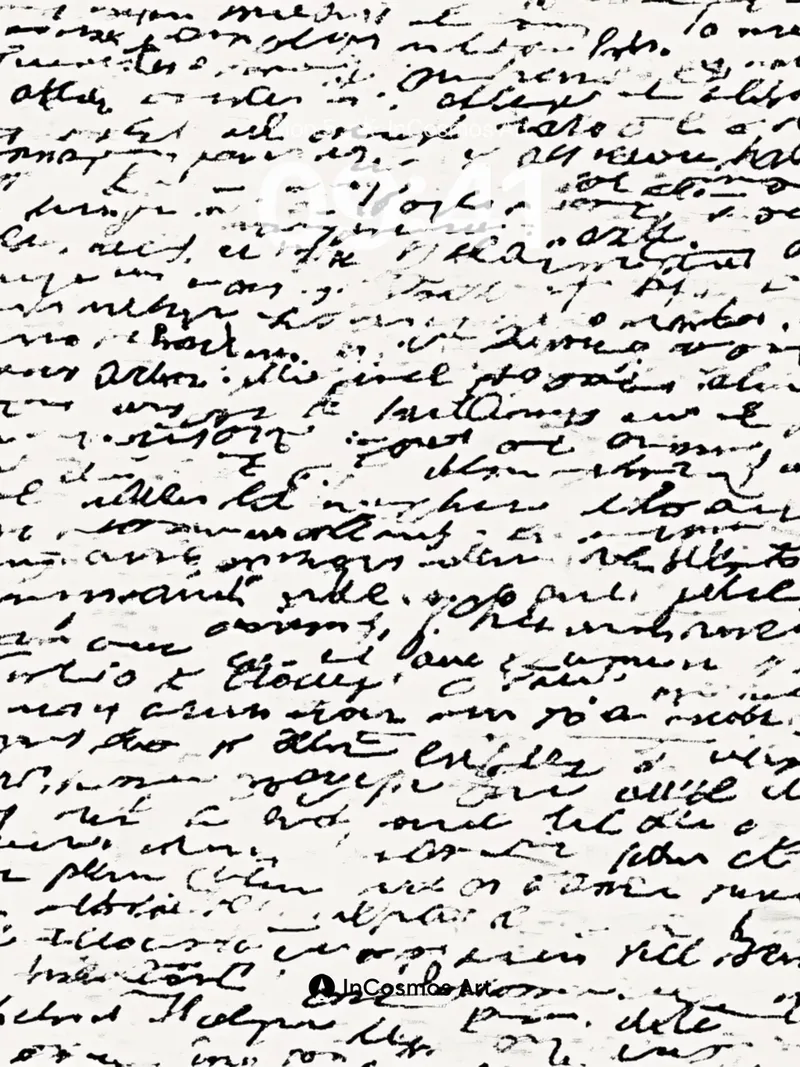
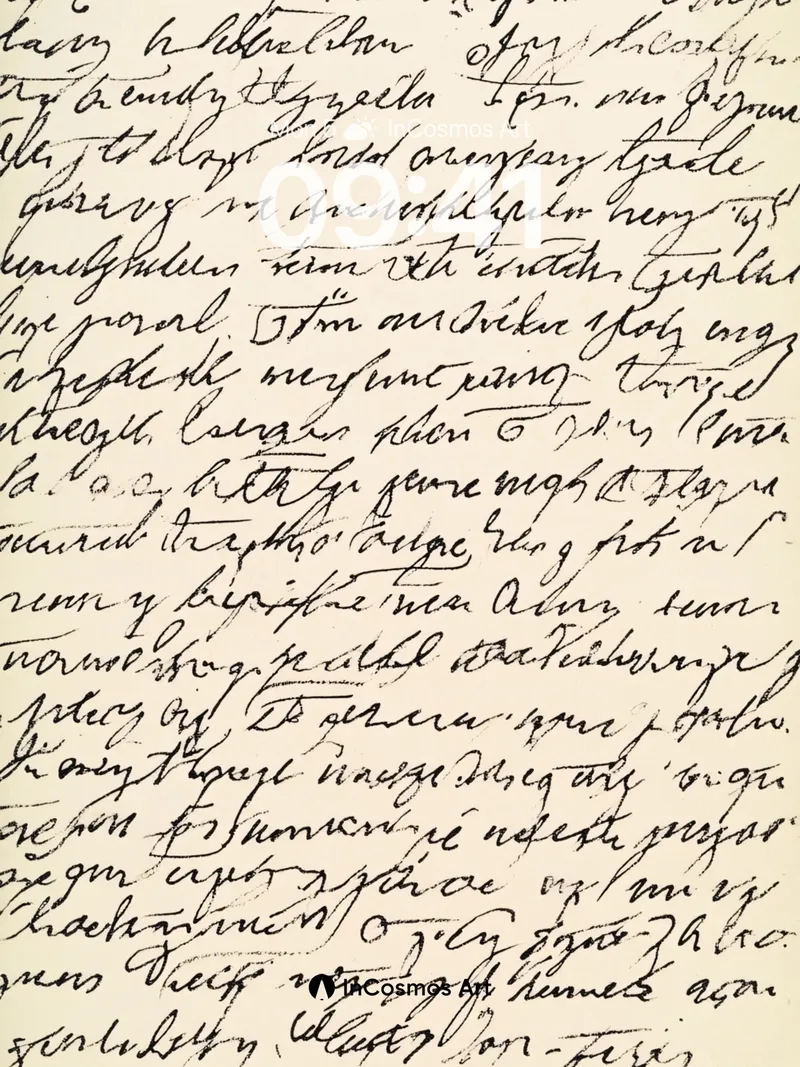
Ink trails across paper like rivers, each stroke bearing unencoded emotion. The ink seeps into fibers, leaving irreplicable marks, echoes of memory within neural endings. These lines are not merely vessels of language but extensions of the body, rhythms of breath, materializations of thought. The writer's gestures, pauses, connections become temporal measures, recording an inner state beyond words. In a digital flood, such traces feel especially precious—they do not seek efficiency but remain faithful to momentary truth. When fingers touch paper, an ancient ritual awakens. It is not input, but confession; not transmission, but offering. The undulations of script resemble heartbeats, tides, human attempts to anchor meaning amid impermanence. Their mere existence resists oblivion.
Ink as a Stamp of Memory
Each ink trace is a slice of time. The act of writing transforms intangible thoughts into tangible symbols, granting fleeting ideas enduring form. This transformation itself is a cognitive ritual. The pen glides across surface—both expression and organization. Emotions release through variations in pressure and speed; thoughts clarify along continuous lines. Apparent randomness in linking reveals underlying logic. Shading shifts mirror psychological fluctuations. Dense clusters signal mental flow; wider gaps suggest hesitation. These nuances form a complete personality map, exceeding the literal meaning of text.
Handwriting’s Resistance to the Digital Age
In an era dominated by keyboard clicks, handwritten text manifests a reverse poetry. It rejects standardization, embraces variation. Each letter’s shape is a unique fingerprint. It depends not on algorithms but on physical movement. This bodily engagement imbues writing with warmth. People cease being passive consumers and become active creators. Beyond the cold glow of screens, paper’s texture, the scent of ink, the friction of nib, constitute a sensory return. This return is not technological regression but spiritual restoration—a reconnection to direct human-material interaction.
Script as Narrative of Identity
Handwriting serves as metaphor for identity. It cannot be forged, easily imitated. From pressure to slant, from linking habits to letter structure, traits reveal character. Psychology long studied graphology as a window to the mind. Though modern science questions its precision, it remains undeniable that script carries a mark of personality. It is private, individual, silent self-expression. In social media culture, this privacy grows rare. As everything gets shared, only handwriting preserves quiet dignity.