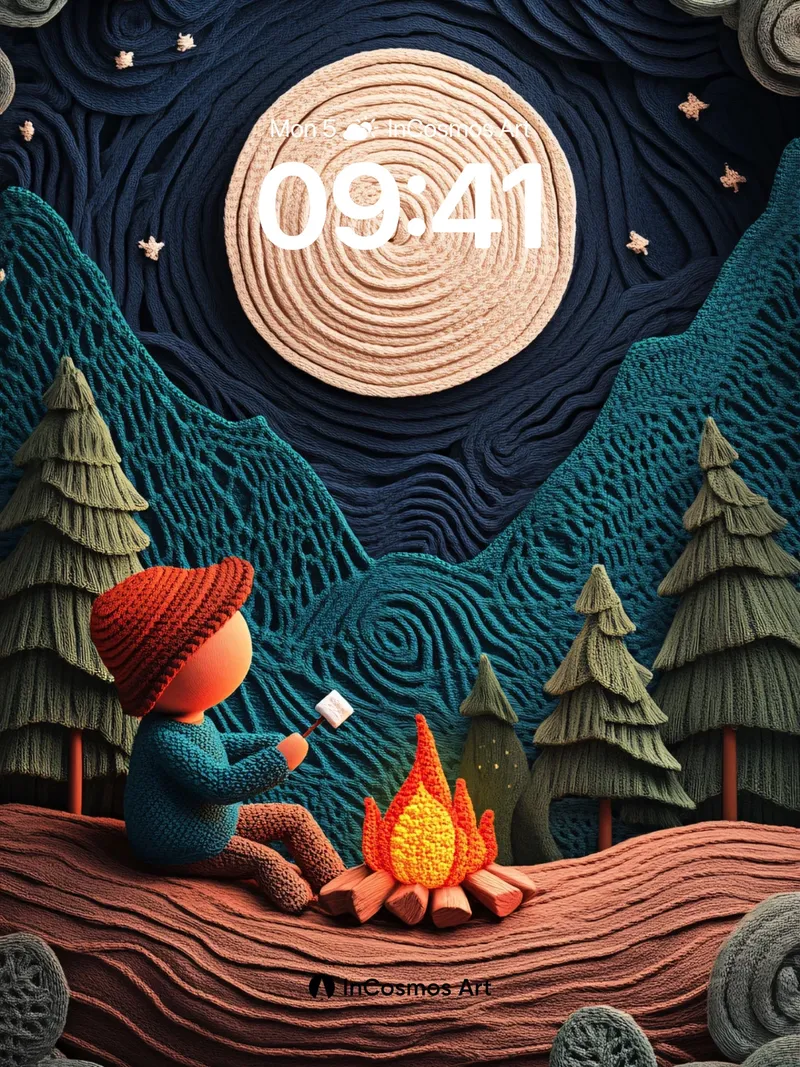
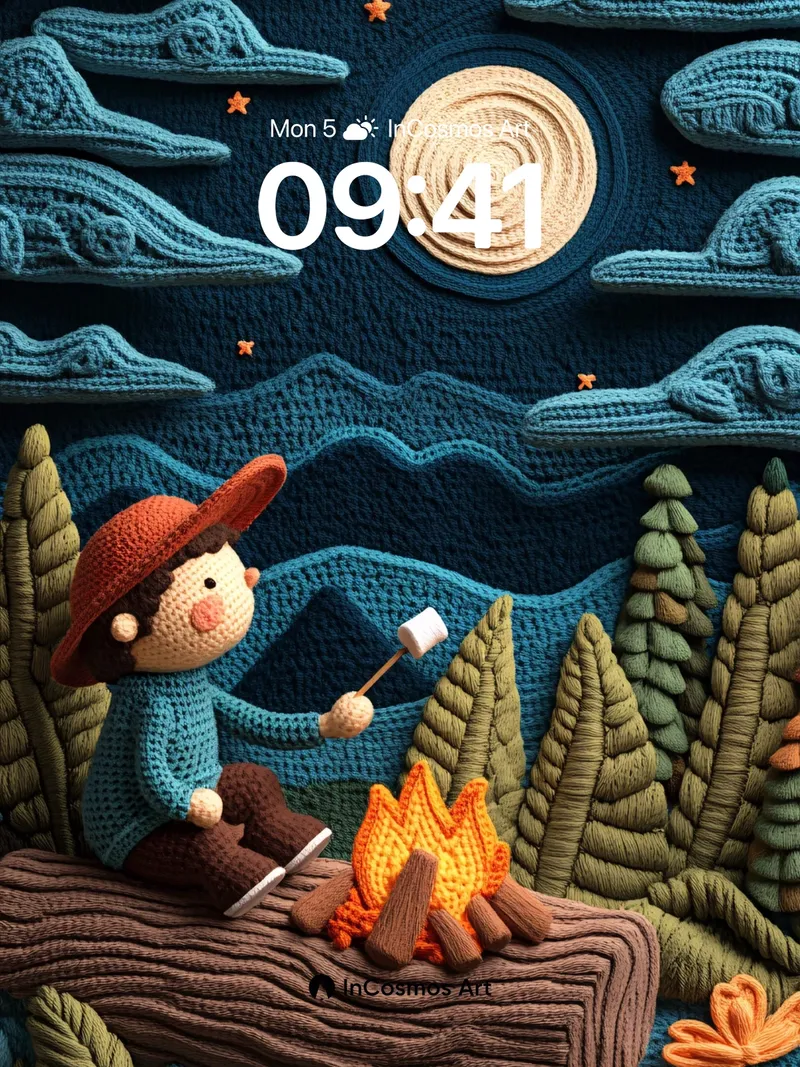
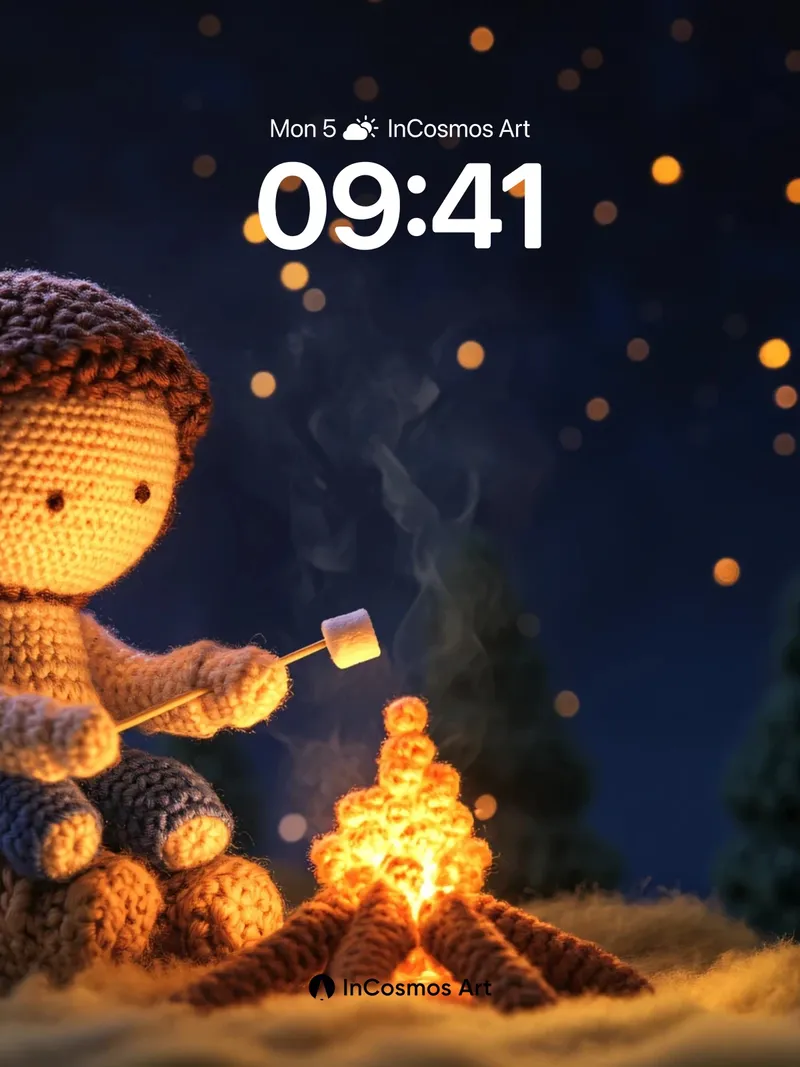
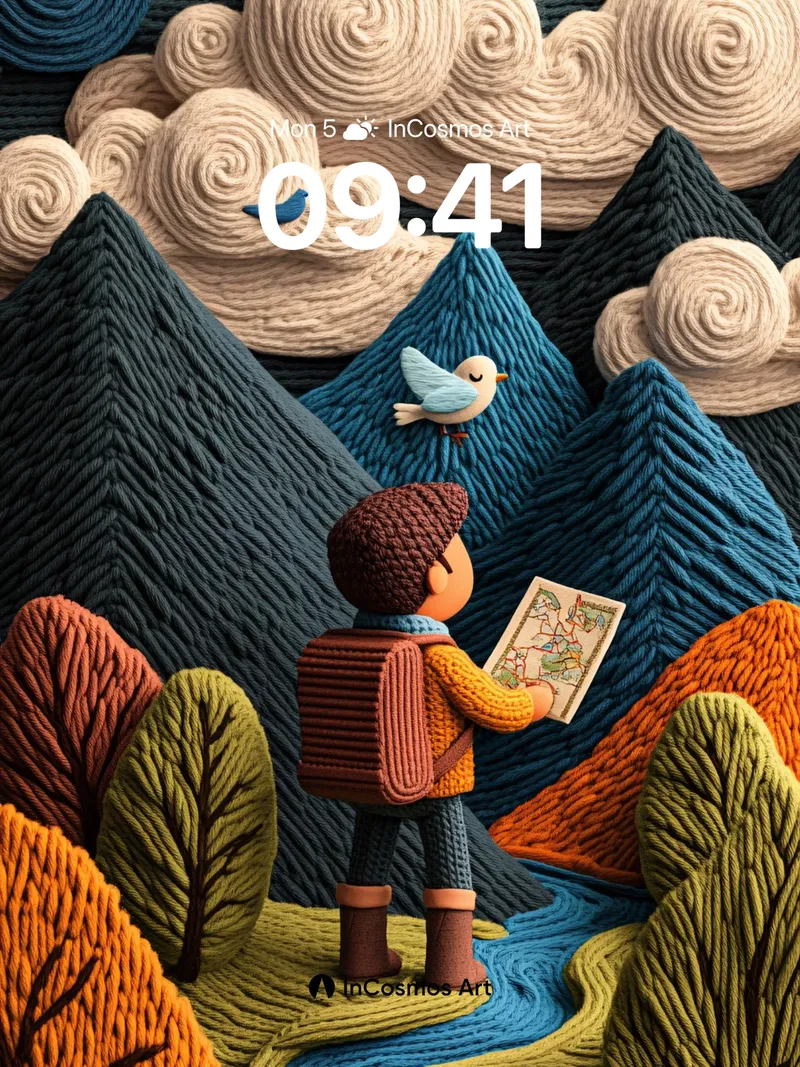
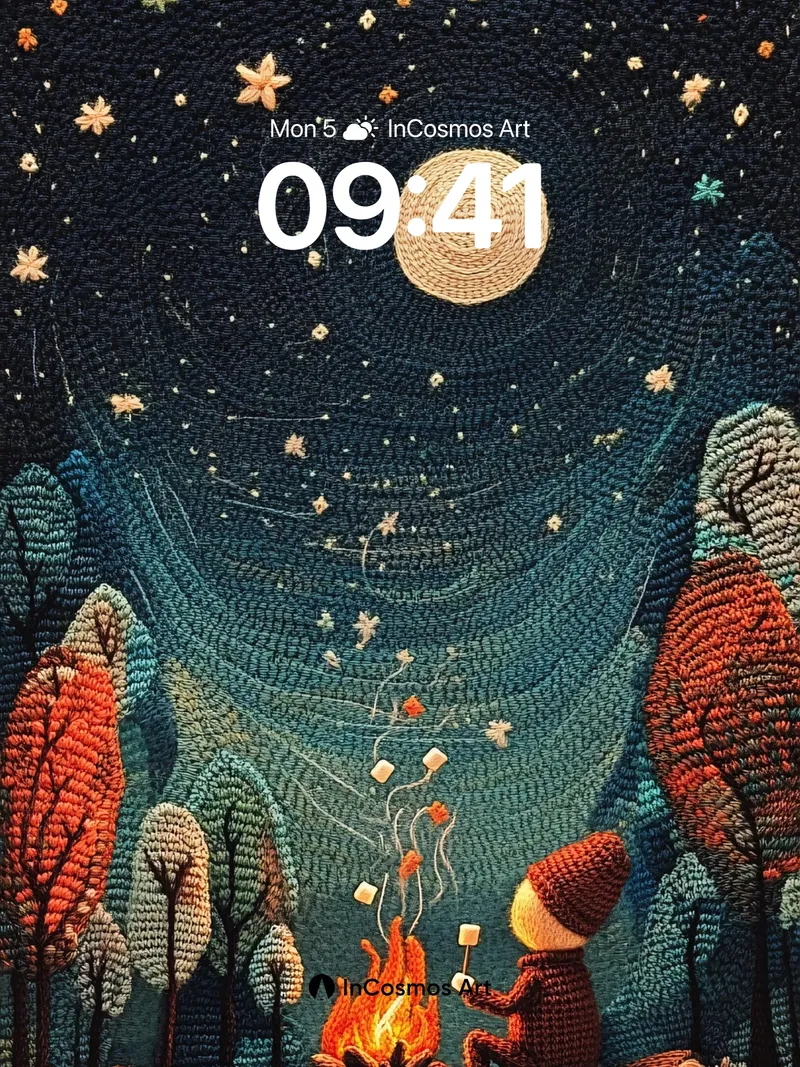
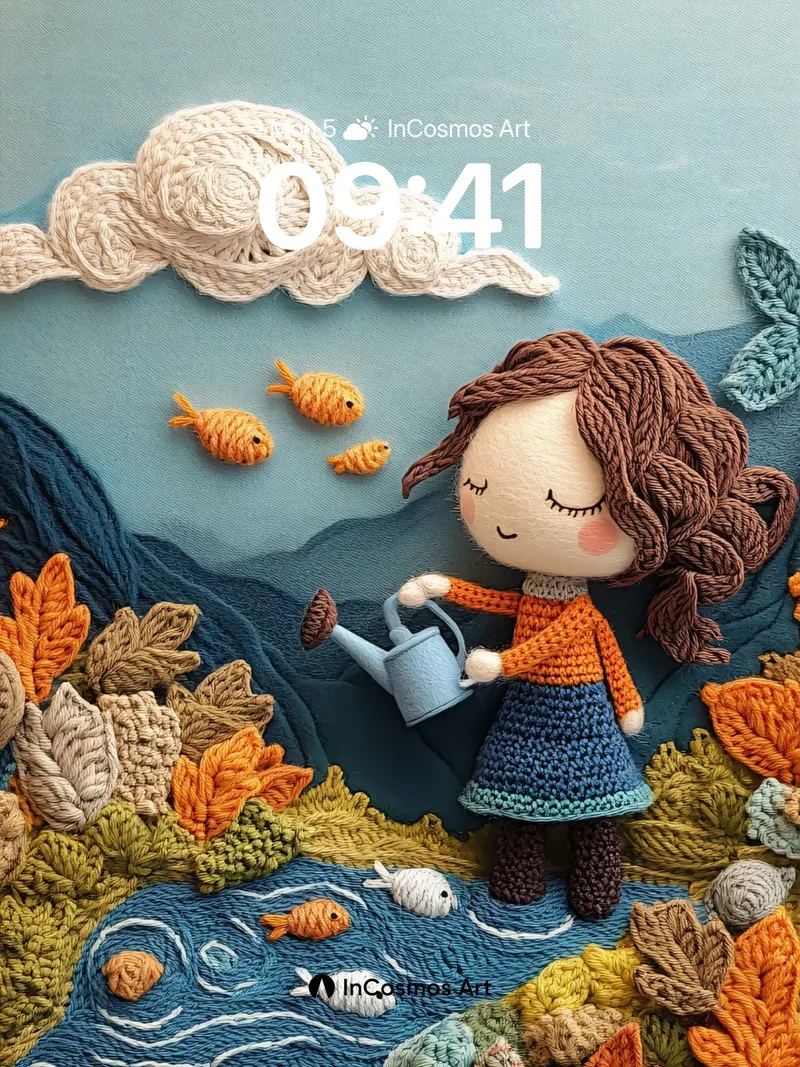
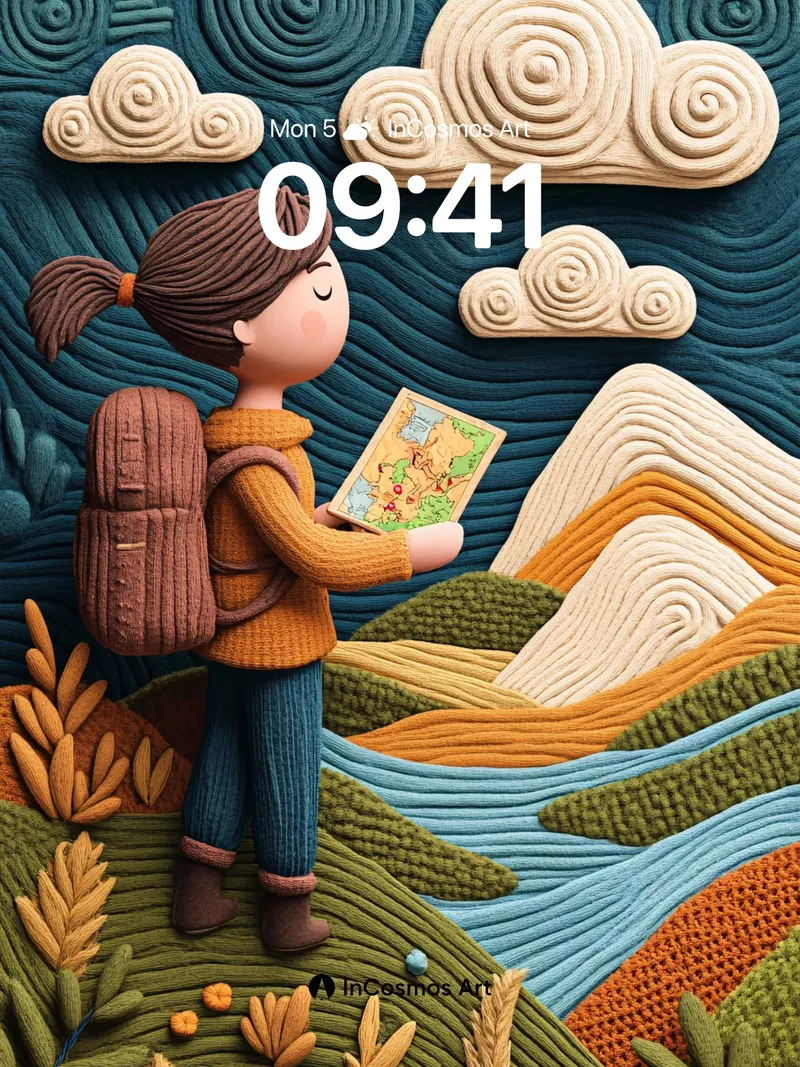
In a world woven from yarn, time stretches, emotions lighten. Each thread carries a silent language, forming the most authentic bond between human and nature. These scenes are not replicas of reality but gentle reconstructions of childhood, seasons, and solitude from deep memory. By the campfire at night, one sits alone, roasting marshmallows beneath a low-hanging moon and swirling clouds. The fire is more than warmth—it mirrors inner longing, a search for stillness and belonging beyond noise. Forests, streams, raindrops, birds—all rendered in knitted texture—suggest the world was built from warm handcraft. Childlike figures move through it, not as protagonists but as observers, participants, simple responses to natural beauty. Pouring water by the stream, walking with a duck under an umbrella, reading a map on a mountain path—each step holds ritual. This is not adventure, but daily poetry. The tactile quality of knitting gives the scenes a tangible truth, rejecting digital coldness in favor of handmade warmth. This art form makes emotion visible, shaping intangible feelings—nostalgia, loneliness, hope—into loops and stitches. When human and nature no longer oppose but coexist, the soul finds room to breathe. These visions evoke not just visual delight but inner calm—a reminder of how to exist gently in a complex world.
The Texture of Nature
Yarn's weave does not merely shape forms but evokes tactile imagination. Forest greens, flowing rivers, swirling skies are expressed through varied thicknesses and directions of thread. This is not realism but poetic distillation of nature’s essence. Mountains rise like breath, clouds curl like dreams, streams meander like thoughts. Viewers feel wind brushing past, rain falling, fire warming—because these elements have been translated into touchable media. Knitting here becomes sensory translation, converting visual experience into bodily memory.
Echoes of Childhood
Character design brims with innocence, exaggerated proportions, simple yet expressive faces. They lack intricate features but convey rich emotional states through posture and action. Focus while roasting, tenderness while watering, calm while holding an umbrella—these gestures point to unspoiled purity. This purity is not naivety but the capacity to remain curious and kind toward the world. Beyond adult anxieties and efficiency, these figures remind us that slowing down, feeling, is life’s true rhythm.
A Home for the Soul
These scenes construct not physical space but psychological space. The fire symbolizes warmth and companionship, the stream represents flow and time, raindrops suggest cleansing and release. Every detail responds to universal human needs: belonging, comfort, hope. The knitted world offers sanctuary—a mental corner to escape real-world pressure. Here, solitude is not absence but opportunity for self-dialogue. When one learns to be with oneself, to converse with nature, true freedom is found.