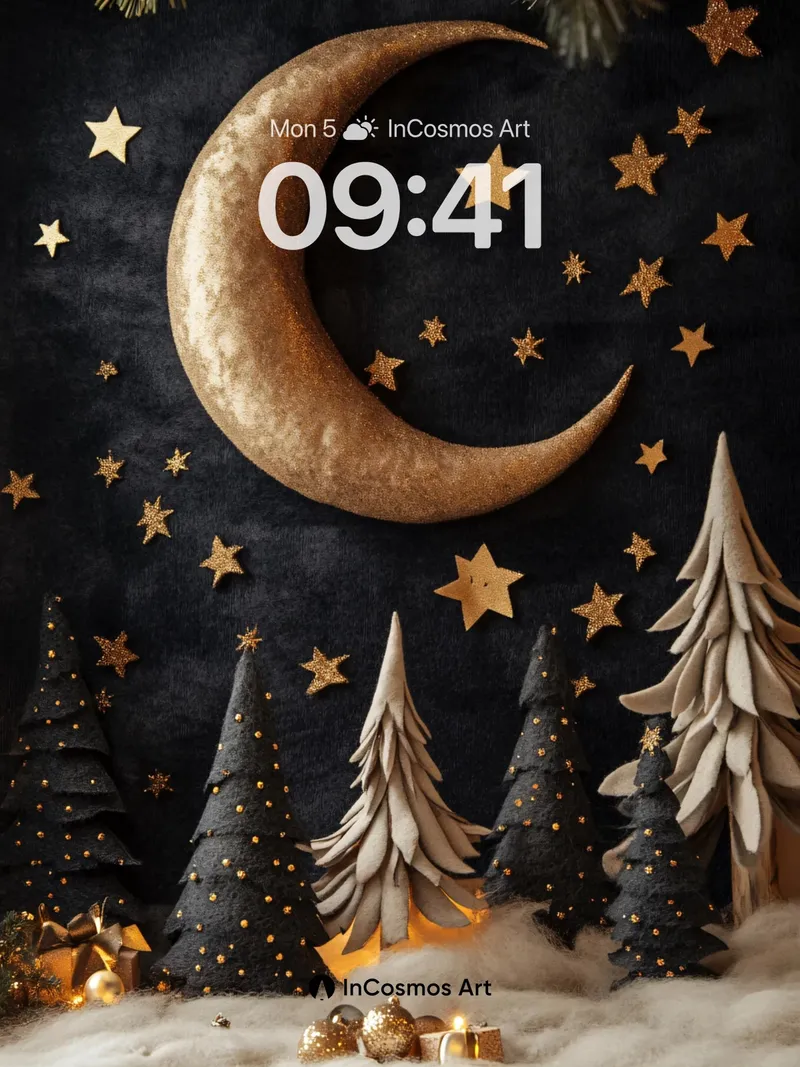
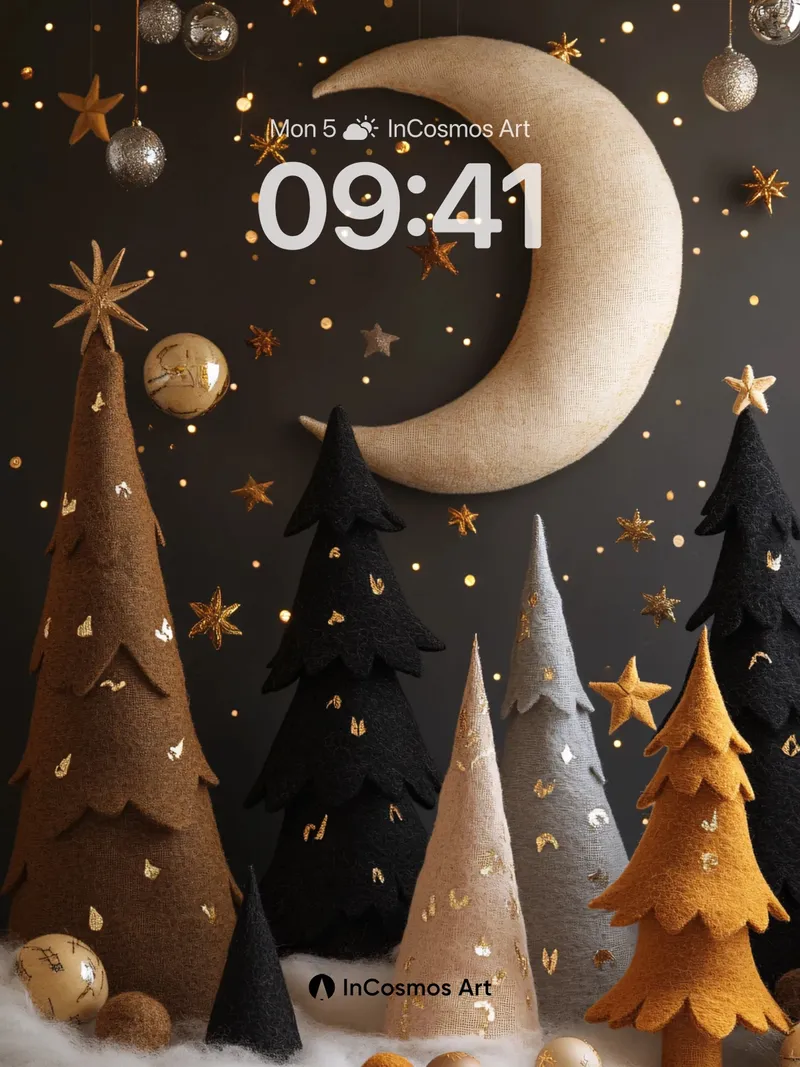
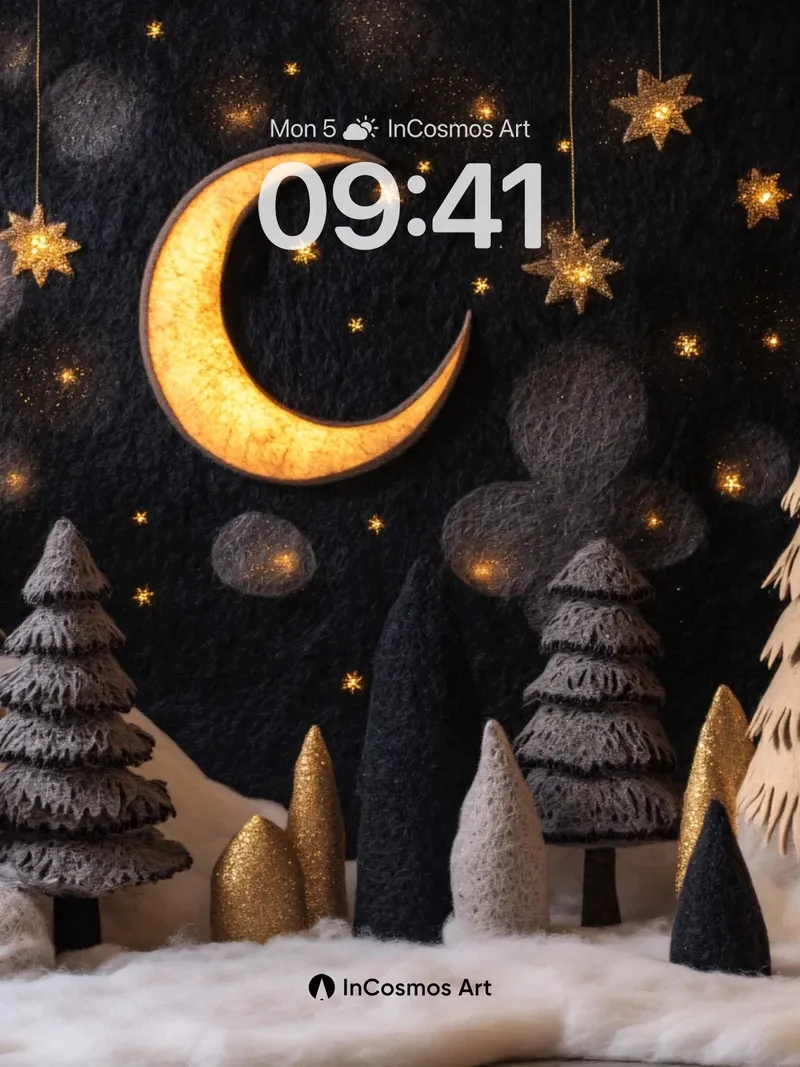
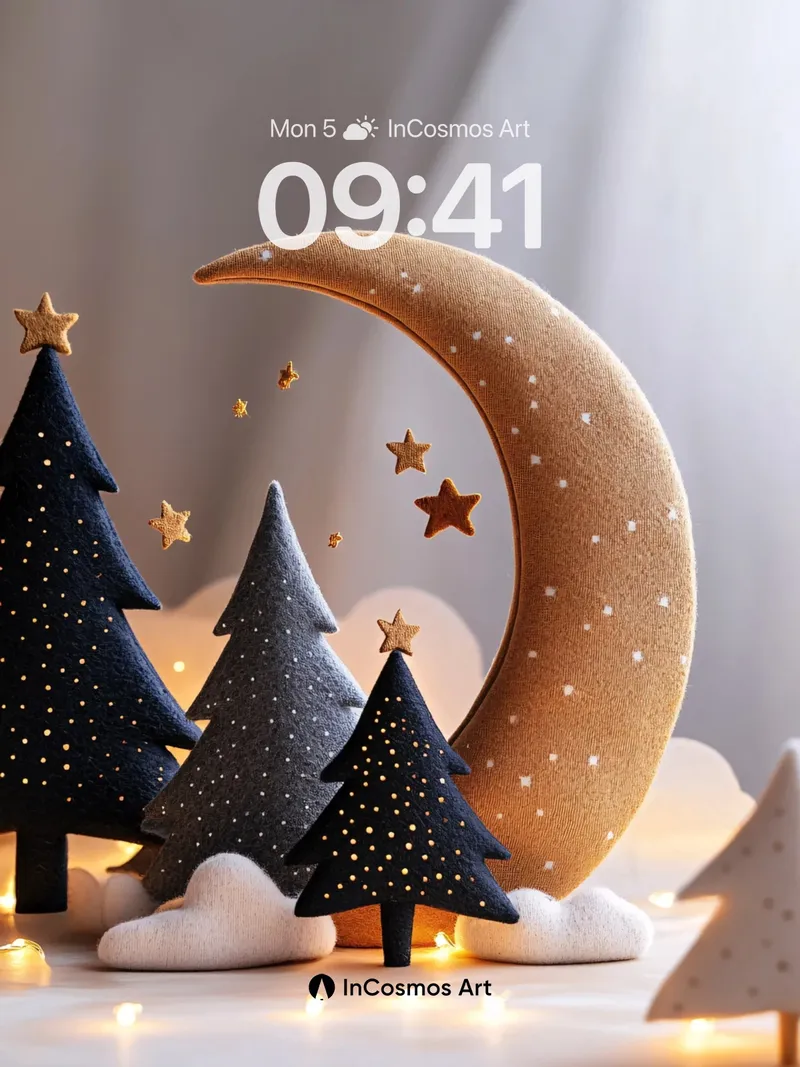
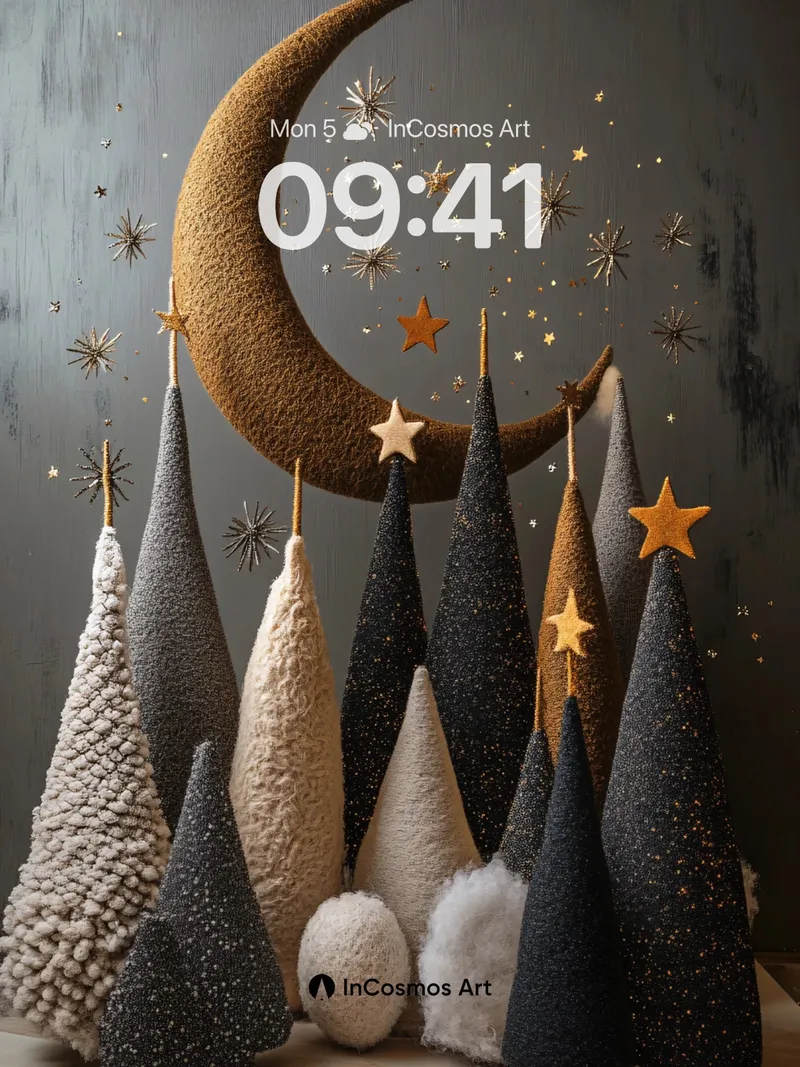
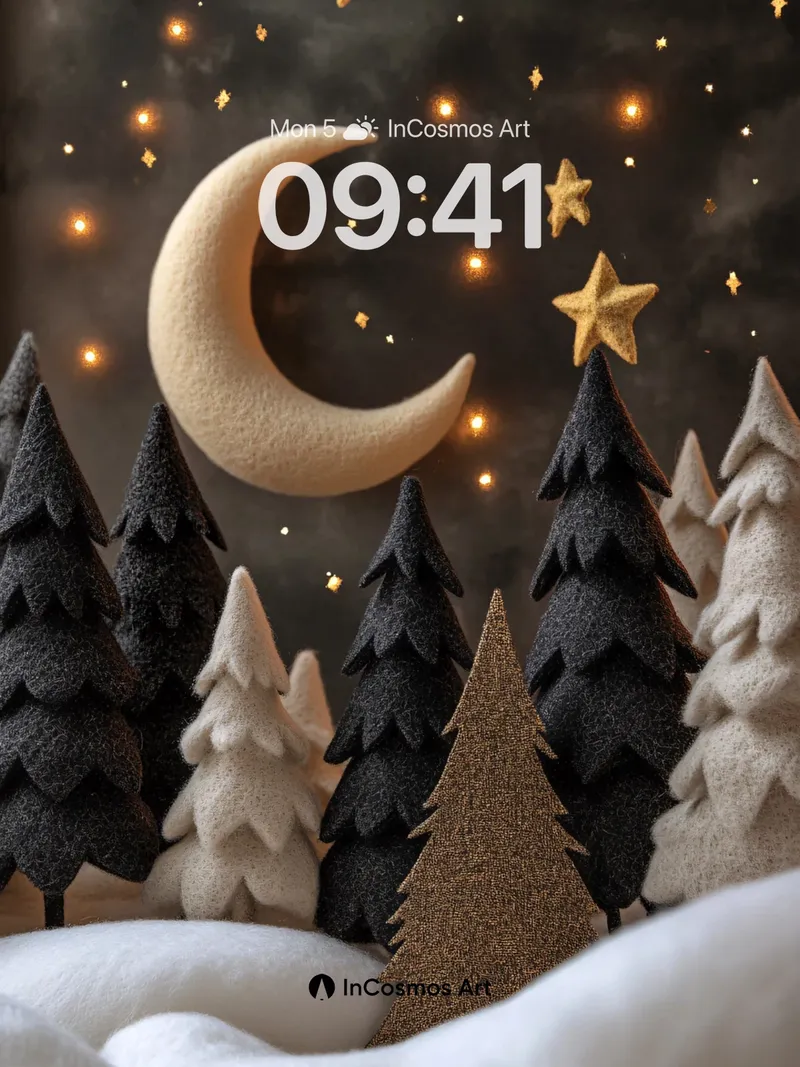
Night falls like ink, stars hang low, a crescent moon suspended above a darkened sky. Felt pine trees stand in staggered formation, each distinct—some dotted with fine gold specks, others layered with white fluff, as if breathing quietly through the cold. They do not clamor or compete for attention, but respond with solemn stillness to the soft glow of the celestial arc above. Golden stars float in midair, some shimmering, others fixed, like tiny messages from the cosmos. This is not a festive spectacle, but a meditation on solitude, order, and natural rhythm. Each tree holds a memory; every speck of stardust carries an unspoken wish. The materials—felt, cotton, metallic powder—express a return to essential beauty: warm without extravagance, simple yet profound. This decorative language rejects industrial uniformity, embraces handmade imperfection, and emphasizes individual presence. It evokes awareness of seasonal change and reverence for time’s accumulation. In an age of accelerating urban pace, such a scene offers psychological grounding, reminding us that mere existence deserves contemplation. When lights gently emerge, snow glows softly, transforming the space into a miniature universe where humans briefly dwell, feeling the quiet harmony of coexistence.
The Poetry of Felt
Felt, as the primary material, imparts softness and resilience to these trees. It is neither smooth plastic nor cold metal, but a medium textured with fibers and traces of handcraft. Its natural affinity invites tactile connection, its visual warmth aligns closely with nature. This material reclaims symbolic forms from abstraction, restoring physicality and emotional resonance. Amidst mass production, felt represents a counter-movement: shifting from efficiency to experience, from replication to uniqueness.
The Symbolic System of Stars and Moon
Golden stars and the moon form a complete cosmic image. They are not randomly placed but carefully arranged to create visual balance and rhythm. The moon, central element, guides the eye with its curved silhouette, hinting at cyclical time. Stars scatter around, varying in size, creating depth and layering. This composition transcends mere decoration, entering spiritual expression: the coexistence of light and darkness, hope and silence side by side.
Silence as Celebration
Traditional holidays emphasize sound, color, and crowds. This setting opposes that norm. It chooses silence, restraint. No bells ring, no fireworks burst—only faint glows spread across snowy ground. This 'silent celebration' poses a question: must true festivity be loud? Perhaps the deepest ritual lies in stillness. When external stimuli fade, and inner echoes become audible, the holiday reaches the soul.