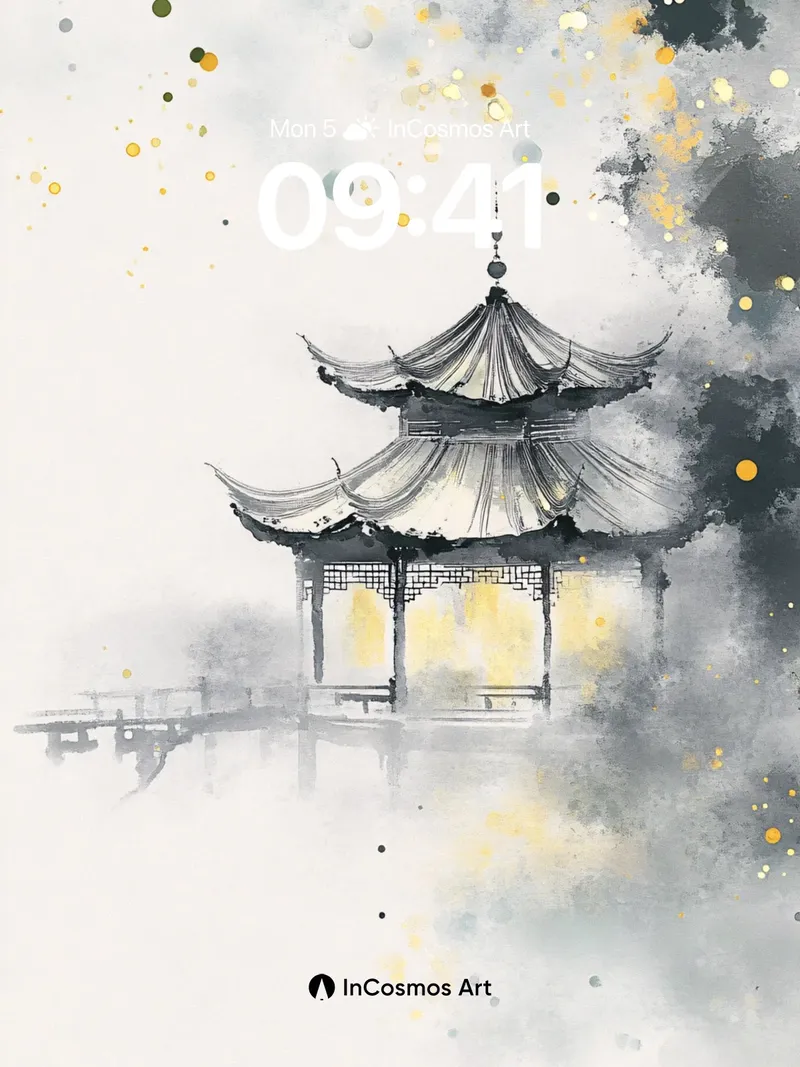
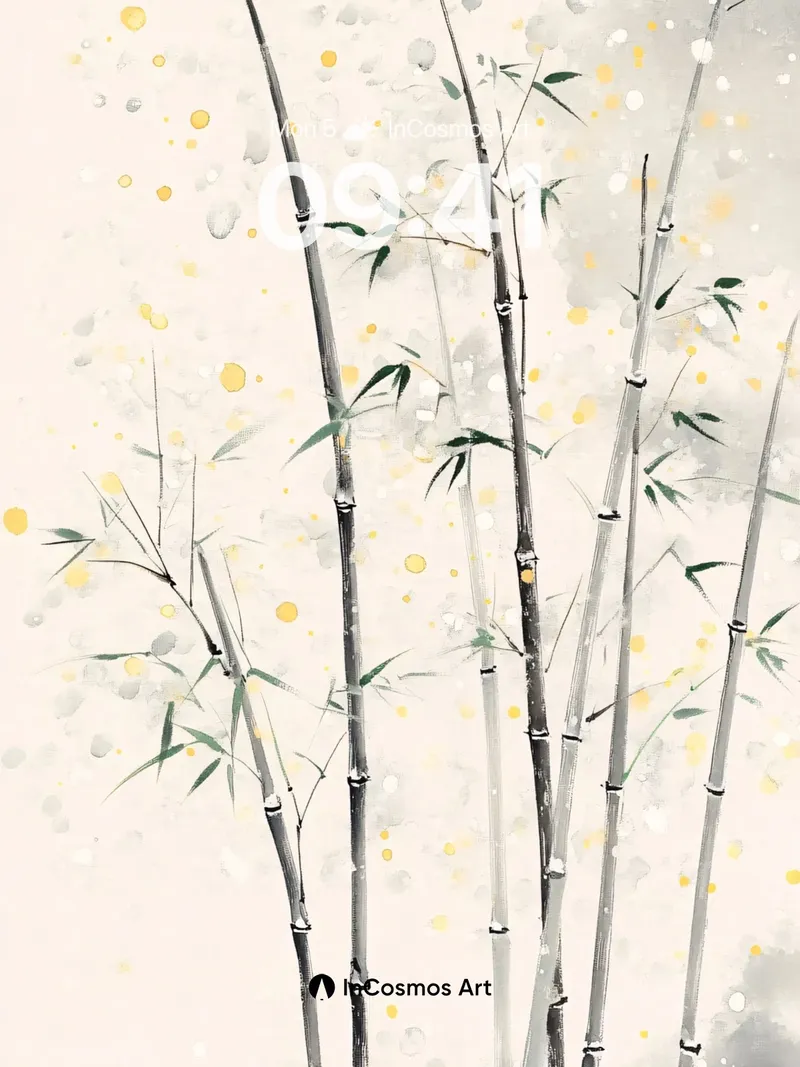
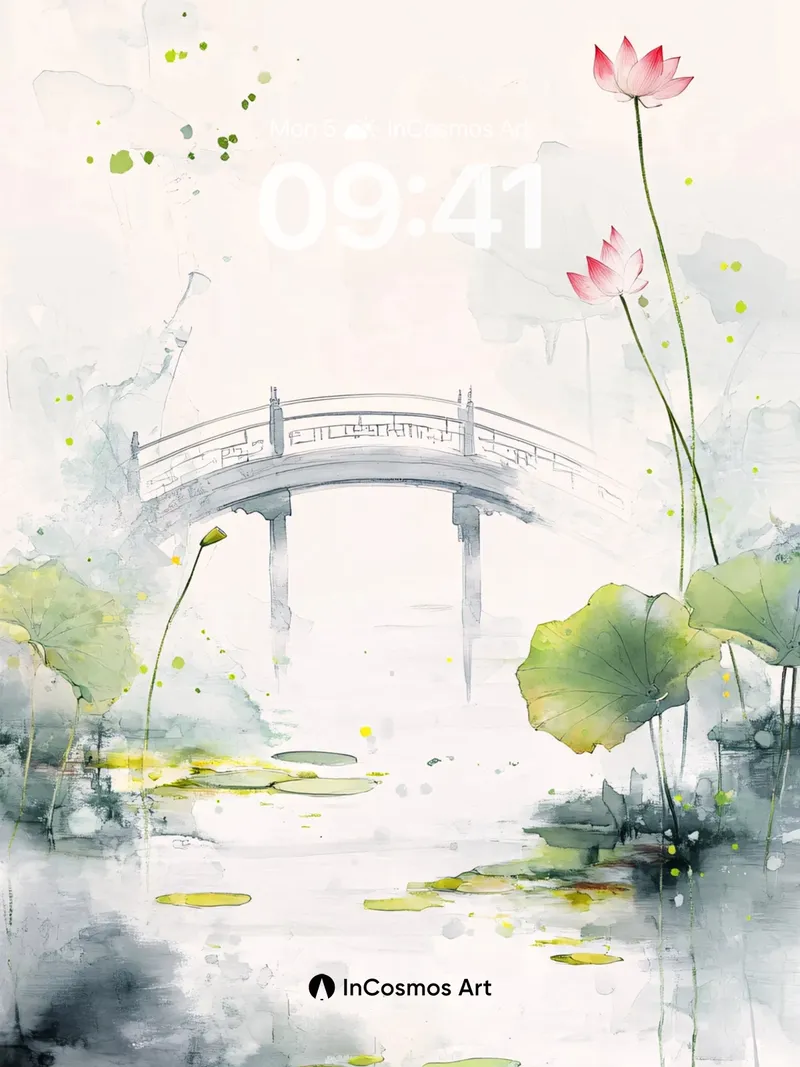
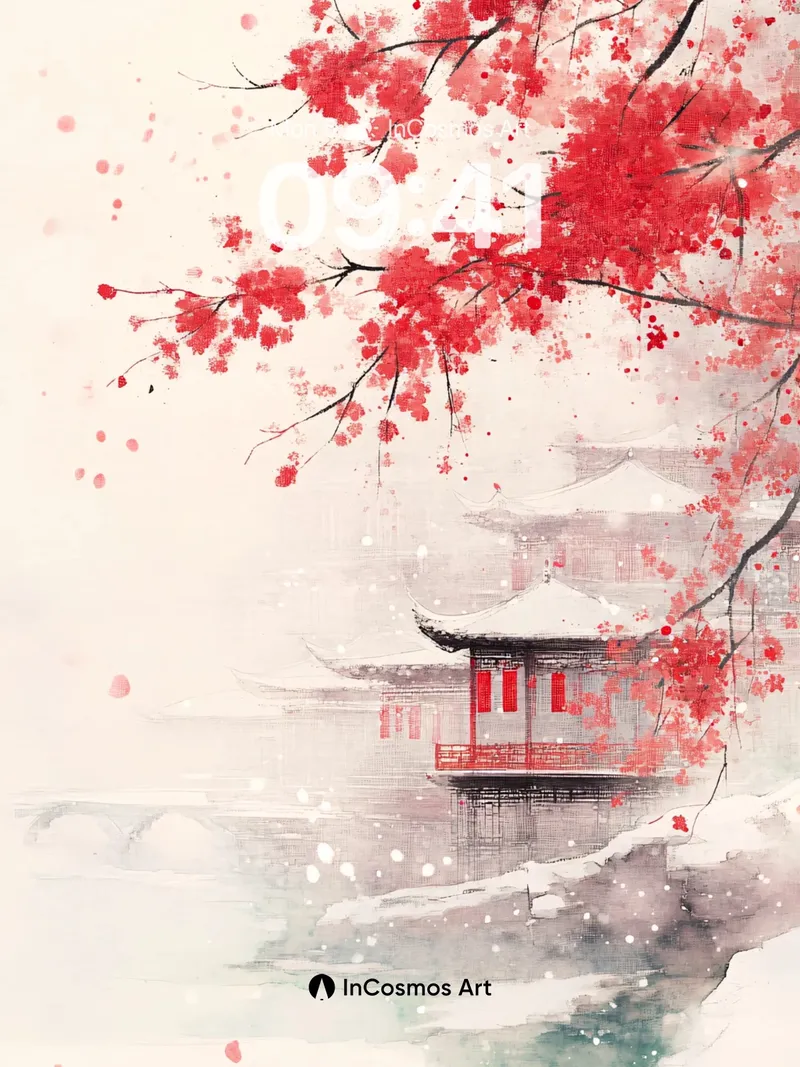
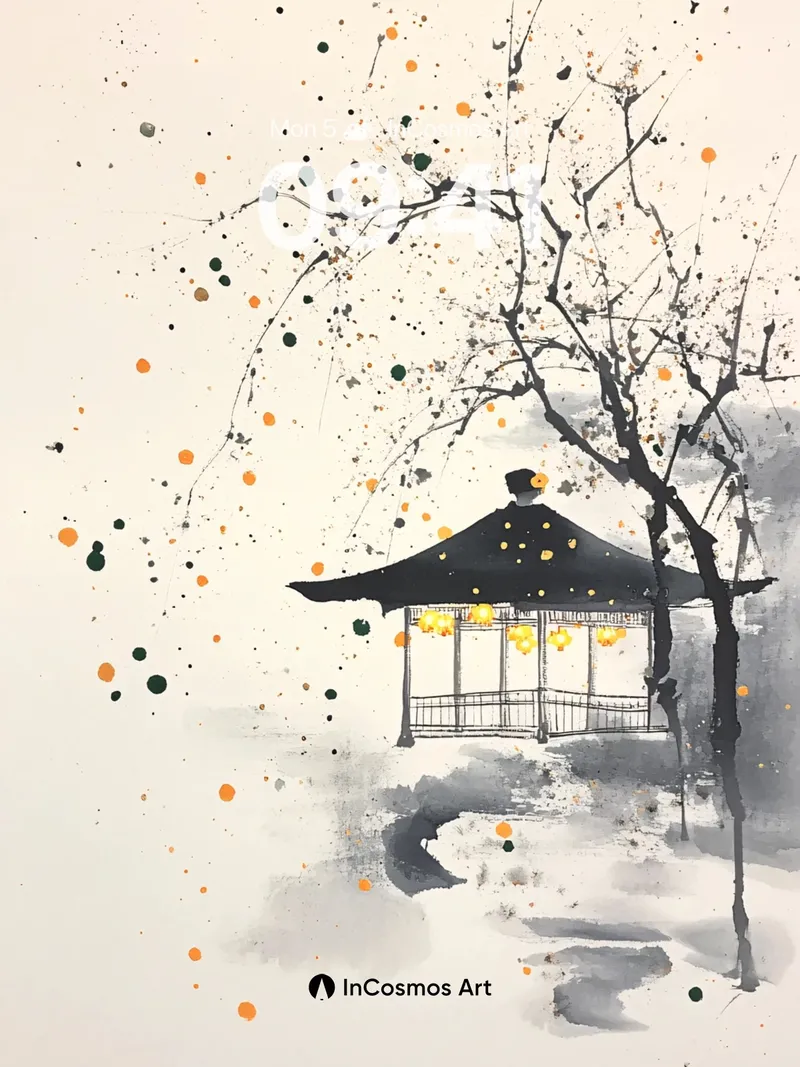
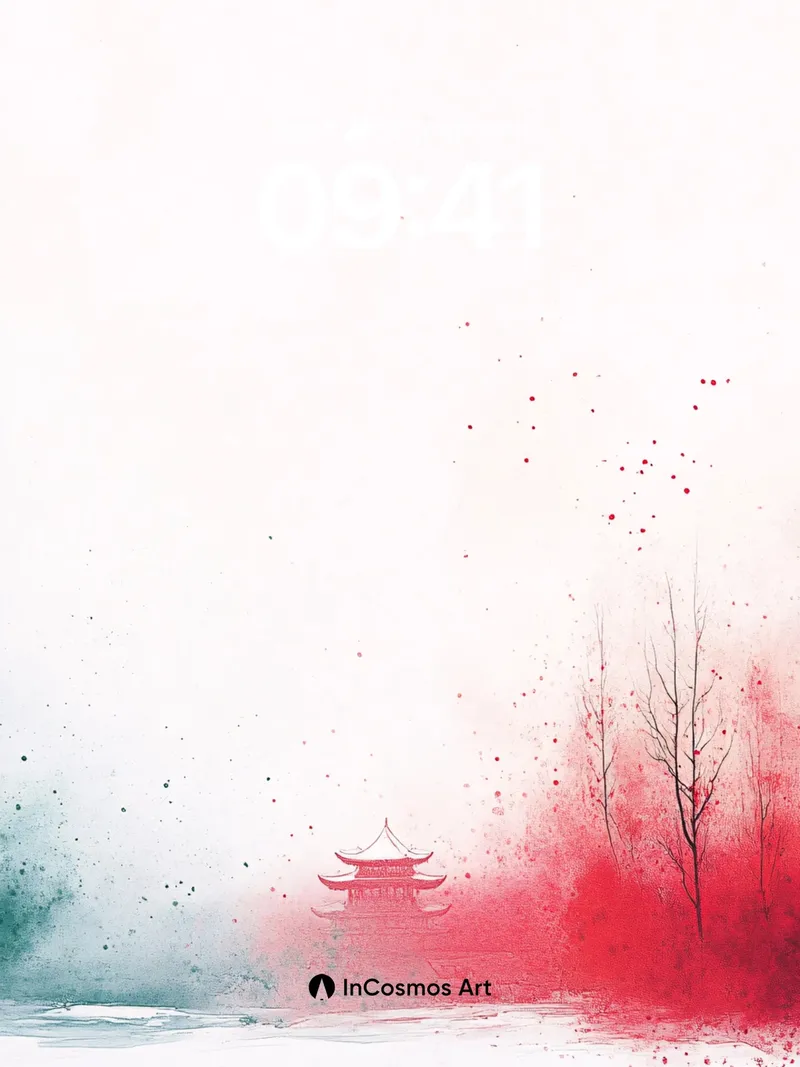
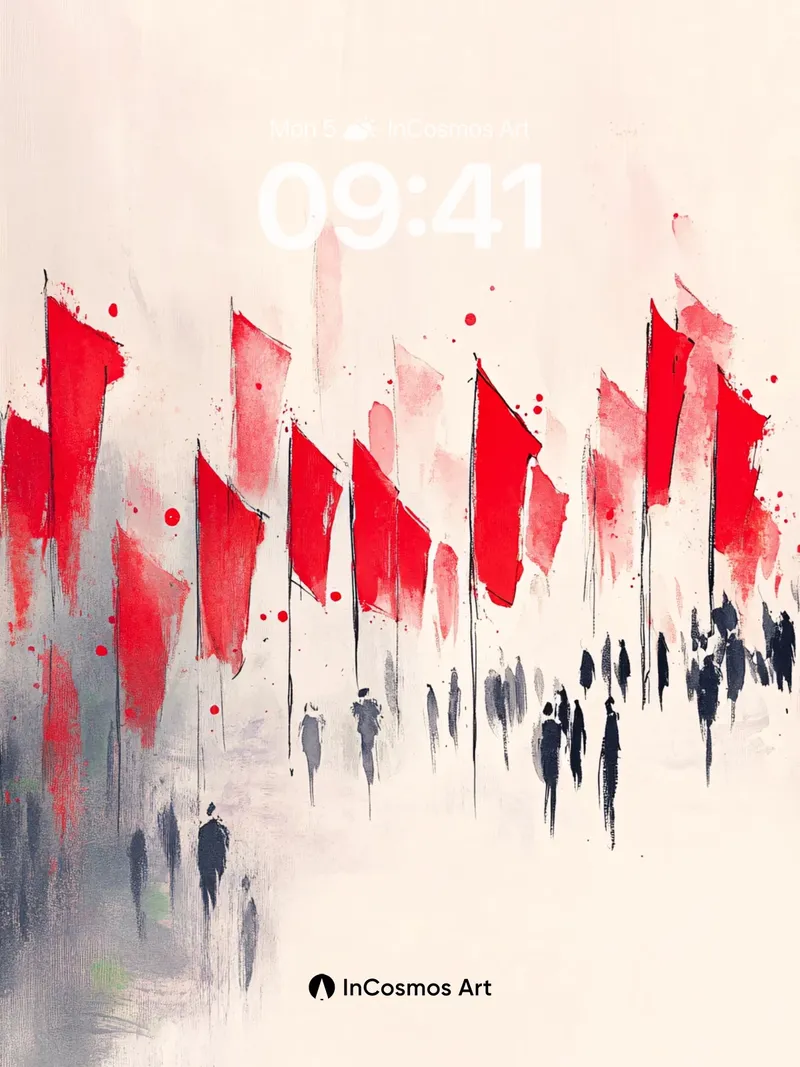
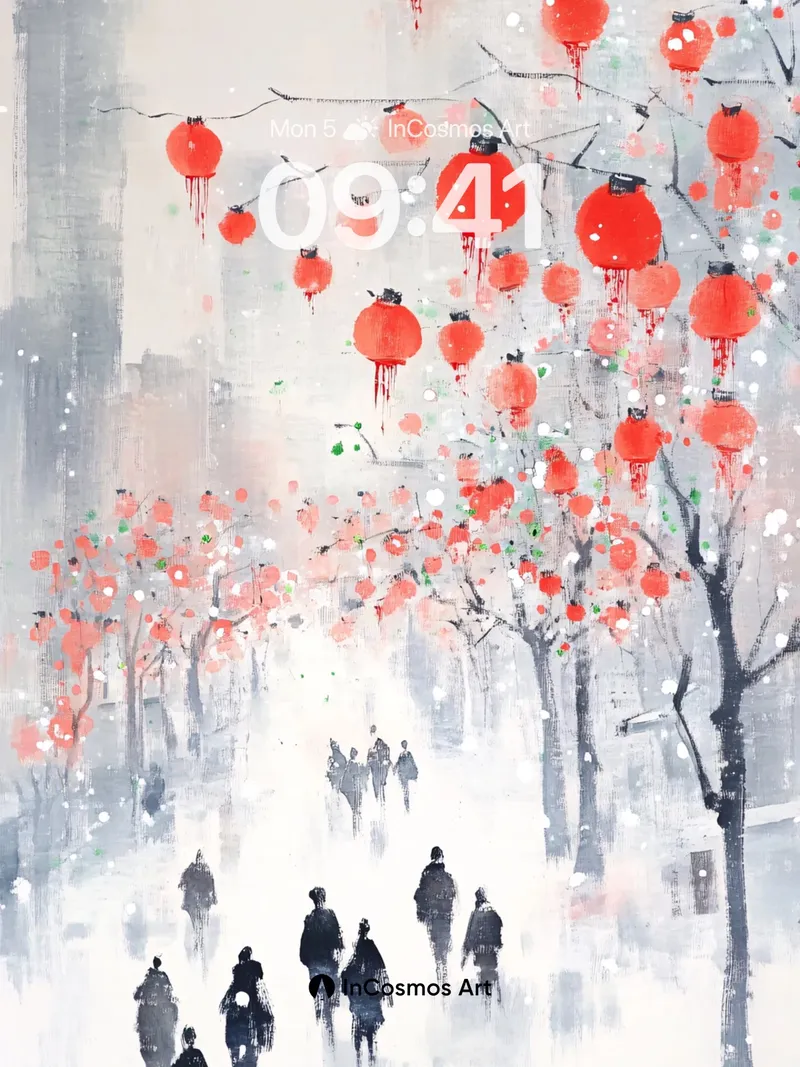
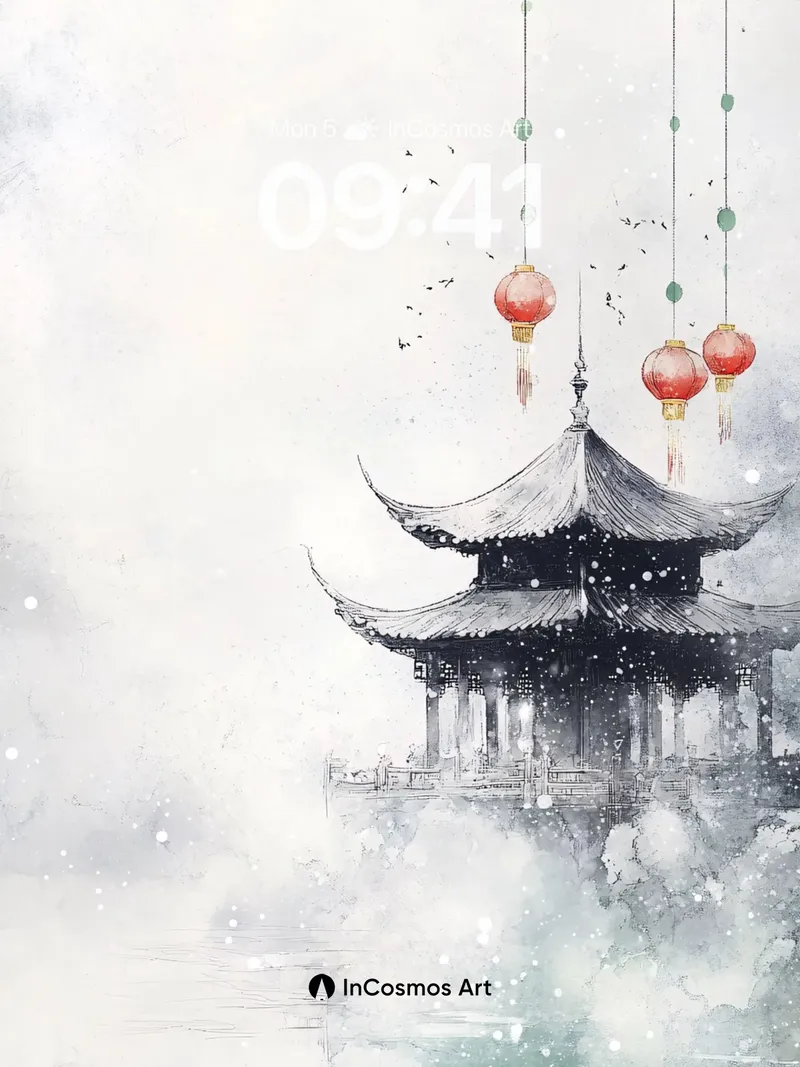
Snow falls without sound, and all things return to silence. Lanterns hanging from eaves sway gently in the cold wind, casting a soft, warm glow that blurs the edges of pavilions. This light not only illuminates architectural forms but also stirs memories of festive traditions. The contrast between red and white is winter's most poignant color dialogue—symbolizing human warmth while emphasizing nature's stillness. Each composition functions like a wordless poem, freezing time within layers of ink-wash depth, allowing viewers to sense seasonal transitions and cultural depth through quiet contemplation.
The Whisper of Winter
Snow blankets mountains and rooftops, yet fails to erase the solitary silhouette of the pavilion. Standing by water or nestled among trees, it appears as a silent witness to the world. Birds dart across ridges, leaving fleeting trails like traces of thought. The structure’s lines fade into mist, revealing the bones of traditional aesthetics—symmetry, layering, negative space. This is not ornamentation but an expression of order and harmony. People no longer speak; only footprints mark the snow, like measurements of time passing.
The Warmth of Red Lanterns
Red stands out vividly against the gray-white world. Lanterns hang from branches or dangle beneath eaves—not as random decoration. They are symbols of celebration, vessels of hope, bridges between humanity and nature. When light passes through paper, its faint glow becomes a weapon against cold. It is not dazzling, but enduring; not loud, but comforting. This restraint embodies the Eastern ideal of 'reserved beauty'—where less is more, and stillness leads to profundity.
The Breath of Ink
The black tones in these scenes are not monolithic but layered, fading from deep to pale, solid to ethereal. Water’s movement is abstracted into textured patterns, where tree shadows, clouds, and reflections drift together. Speckles of color scatter throughout—like petals falling, stars descending—creating dynamic stillness. This is not realism but emotional projection. Viewers see not just scenery, but their own longing for peace and introspection.
Symphony of Humanity and Nature
Urban silhouettes appear faintly in the distance, while figures wrapped in coats walk through snow. They are not central, yet essential to the scene. Human presence does not disrupt nature’s integrity; instead, it introduces rhythm into the landscape. Lights and people, pavilions and snow, spring and winter—all reach a delicate equilibrium. This balance is not opposition but coexistence—a poetic existence rooted in Eastern philosophy.